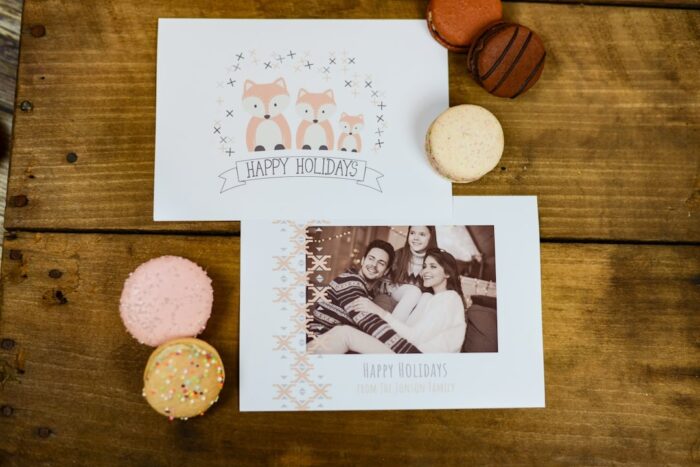
Photo by Mockaroon on Unsplash
The appeal of a personalized gift is simple: it communicates that the giver thought specifically about the recipient rather than selecting something generic. As the market for personalized products has expanded, the range of occasions for which they are considered appropriate has grown considerably, from traditional milestone moments to casual celebrations that previously involved no gifts at all. Producers who offer personalization on premium products, such as Loch Lomond Whiskies with their personalized whisky range, reflect the broad recognition that a name, date, or message on a quality product transforms it from a purchase into a keepsake.
What Personalisation Actually Adds to a Gift
Personalization adds a layer of specificity that no off-the-shelf alternative can replicate. When a gift includes the name of the recipient, a significant date, or a private message, it becomes an object that belongs to that person in a way that goes beyond ownership. It cannot be returned to a shop. It cannot be passed on without losing most of its meaning. It will remain associated with the occasion for which it was given long after the event has passed. This permanence is precisely what makes personalized gifts the natural choice for moments that the giver wants to mark as significant, rather than simply acknowledged.
The Occasions That Call for Personalization
Certain occasions have always been associated with personalized gifts: the milestone birthday, the wedding anniversary, the retirement after a long career, the christening or naming ceremony. These are moments that both giver and recipient recognize as marking a transition or an achievement, and the permanence of a personalized object reflects the weight of the occasion. Beyond these traditional events, personalized gifts are increasingly given for occasions that were previously marked in less formal ways. Housewarmings, graduations, promotions, and even significant personal achievements that carry meaning for the recipient but no formal social recognition are now commonly marked with a personalized gift.
Choosing What to Personalise
The choice of what information to include on a personalized gift requires some thought. A name alone is the most minimal form of personalization and the most universally appropriate. Adding a date gives the gift a temporal anchor that connects it to the occasion forever. A brief message or inscription requires more care: it should be something that will read well not just now but in years to come, when the object may be taken down, examined, and remembered. Avoid the kind of humorous inscription that is funny in the moment but may feel awkward in a different phase of life. Aim for something warm, specific, and durable.
Lead Times and Ordering Considerations
Personalized gifts require more planning than standard purchases because they involve a production step, whether engraving, printing, embossing, or a similar process, that takes time. Most suppliers quote a lead time of several days to a couple of weeks for personalized orders. Ordering early is the single most important practical consideration for anyone giving a personalized gift for a specific date. Leaving the order until the final few days before an occasion introduces risk, and the anxiety of whether the item will arrive in time detracts from the pleasure of the giving. Building in at least a week of margin is sensible for most personalization suppliers and longer for bespoke or unusual requests.
Personalized Gifts for Corporate and Professional Occasions
The corporate gift market has increasingly moved toward personalized items, partly because personalization implies the same considered approach in a professional context that it does in a personal one. A company that gives a generic branded item to a client or partner communicates one thing; a company that takes the time to personalize an item for a specific person communicates something markedly different. In professional relationships where trust and attention are valued, a personalized gift reflects the kind of care that strengthens the relationship rather than simply acknowledging a convention. Premium products with personalized elements are particularly well suited to this context because they combine quality with specificity.
Displaying and Preserving Personalized Items
Unlike standard gifts that may be used and gradually forgotten, personalized items tend to be kept and often displayed. They end up on shelves, in cabinets, and in spaces where they can be seen regularly, which means they continue to function as reminders of the occasion and the relationship long after the event itself. This long-term presence in the recipient’s home is part of the value of personalization. When choosing what to personalize, it is worth considering whether the object is one that the recipient will want to keep and display, or whether it will be consumed or used up. For permanent personalized items, the quality of the object matters as much as the personalization itself.
Another creative gift idea is to turn a favorite photo into a diamond painting kit that the recipient can complete themselves. By choosing personalized diamond art, a family portrait, pet photo, wedding picture, or other meaningful memory can be transformed into a printed canvas with matching resin diamonds. The process is easy to follow even for beginners and combines a relaxing craft activity with a highly personal finished result. Once completed, the sparkling canvas can be framed and displayed as a lasting keepsake.
When Personalization Replaces the Need for a Large Gift
There are occasions where a modest but personalized gift communicates more warmth than a larger but generic one. A small item with a carefully chosen inscription from someone who clearly thought about the recipient can outperform a substantial gift selected in haste. This is freeing for givers who are working within a budget but want to give something that feels significant. Personalization compensates for scale: a wallet, a mug, a bottle, or a notebook at a modest price point becomes a more meaningful object when it carries the evidence of specific thought. The hierarchy of gift value is not solely determined by cost.
The Growing Market for Premium Personalized Products
The demand for personalized products has expanded steadily over the past decade as both the supply of personalized options and the cultural acceptance of personalization as a normal gift format have grown. Premium producers across categories, from leather goods to jewelry to food and drink, have introduced personalization options in response to consistent consumer demand. The result is that it is now possible to find genuinely high-quality personalized gifts in almost any category, removing the historic trade-off between personalization and quality. This shift has made personalized gifts a credible choice not just for close family occasions but for any moment where a gift should communicate real consideration.

Leave a Reply