
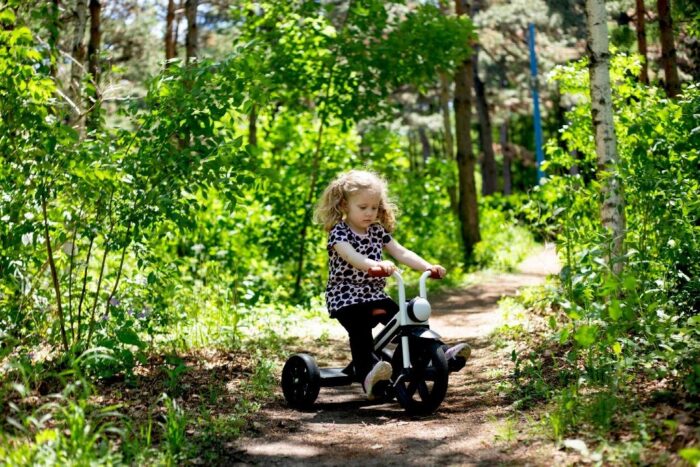
Your toddler wants to ride a tricycle to the park, but halfway down the sidewalk, they stop pedaling. You offer a little encouragement, and they try again. A few minutes later, they’re tired and asking you to push.
If you’ve experienced a moment like this, you know that choosing a tricycle isn’t just about picking a fun-looking ride. You also need to think about your child’s current skills, your daily routines, and how much support you’ll need to provide.
So, tricycle with handle or without—which option makes more sense for your family?
A parent handle can make outings more manageable, especially when a toddler is still learning to pedal and steer. But not every handle offers the same type of control, and a handle-free tricycle may be a better fit for a child who is ready to ride independently.
Let’s look at the differences, practical situations, and features worth considering before making your choice.
Tricycle With Handle or Without: Understanding the Main Difference
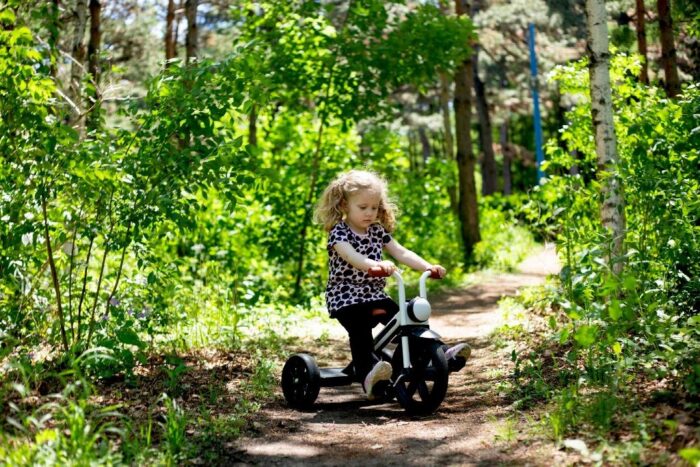
At first, a parent handle might seem like a simple add-on. You push from behind, your child sits comfortably, and everyone enjoys the walk. But the way the handle works matters more than you might expect.
Some parent handles connect to the front-wheel steering system. When you turn the handle, you can also help direct the tricycle. Other handles are designed primarily for pushing and may not allow you to control the front wheel.
This is an important distinction when you’re comparing different models.
A tricycle with a parent handle can help parents guide their children around corners or adjust their direction. A push-only handle, on the other hand, may provide forward assistance without giving the adult direct steering control.
Before buying, check the product’s specifications rather than assuming every parent handle functions in the same way.
And honestly, this is one of those small details that can make a big difference when you’re out with a toddler who suddenly decides they want to go in a completely different direction.
When Does a Push-Handle Tricycle Make Sense?
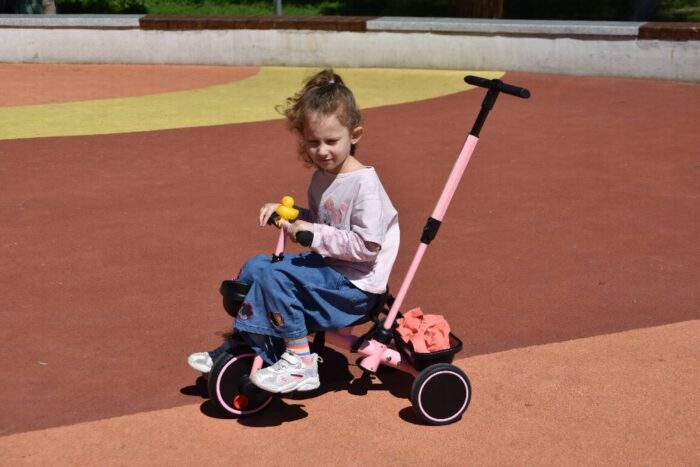
A push-handle tricycle can be especially useful for toddlers who are still learning how to ride.
Think about a two-year-old who wants to move around like a big kid but hasn’t quite mastered pedaling or steering. They may be eager to explore, but they still need help managing the tricycle.
In this situation, a parent handle gives you a way to support the experience while your child develops new skills.
A push-handle tricycle can be a useful choice in several everyday situations.
When Your Toddler Needs Help During Longer Walks
Some toddlers are too active to enjoy sitting in a stroller for the entire outing, but they may not have the stamina to ride independently for a long time.
A tricycle with a parent handle gives them another way to participate in the walk. They can sit on their tricycle, enjoy the surroundings, and practice riding while you provide assistance when needed.
For families who visit parks, walk around the neighborhood, or make short trips together, this flexibility can be helpful.
When Your Child Is Learning to Pedal
Pedaling takes coordination and practice. Your toddler may understand what they need to do but struggle to keep the tricycle moving.
A parent-assisted tricycle can give them opportunities to practice while an adult helps with movement. However, the amount of support available depends on the specific model.
The goal isn’t to make every ride completely effortless. It’s to give your child time to become familiar with the activity without expecting them to master everything at once.
When You Want a Gradual Transition
Some tricycles offer multiple configurations that allow children to move from parent-assisted riding toward greater independence.
Depending on the model, these configurations may include a parent handle, footrests, pedals, or other adjustable features.
This type of setup may be useful for families looking for a bike for 2 year old or another riding product that fits their child’s early development.
Be sure to check the product’s intended age range and configuration instructions. Not every product offers the same transition options.
When Your Toddler Gets Tired
This is a very common part of raising a toddler.
Your child may be excited to ride at the beginning of a walk, only to lose interest halfway through. If the tricycle has a suitable footrest, they may be able to rest their legs while you continue pushing.
That can make the return trip easier for everyone.
Of course, the child should remain properly positioned and supervised according to the manufacturer’s instructions.
When Might a Handle-Free Tricycle Be a Better Fit?
Now imagine your toddler has already developed some basic riding skills.
They can pedal, steer, and move around a familiar riding area. They enjoy deciding where to go and want to control their own speed and direction.
In this situation, a handle-free tricycle may provide a more independent experience.
Without a parent push handle, the child takes more responsibility for moving the tricycle. This can be suitable when they’re ready to practice riding without continuous adult assistance.
A handle-free tricycle may be worth considering when:
l Your child can pedal and steer independently.
l They enjoy exploring in a safe, supervised riding area.
l They can follow basic instructions about riding and stopping.
l You primarily plan to use the tricycle for play rather than longer walks.
Still, independence should be based on your child’s abilities rather than age alone.
Two toddlers of the same age can have very different coordination, confidence, and riding experience. One may be ready for independent riding, while another may still benefit from adult support.
If your child regularly becomes tired or needs help controlling the tricycle, a handle-free model might be less practical for longer outings.
Final Thoughts: Choosing the Right Tricycle for Your Family
When deciding between a trike with handle or without, start with your child’s needs.
A tricycle with a parent handle may be useful for toddlers who are still developing riding skills or who need assistance during family walks. A handle-free tricycle may suit children who are ready to take more responsibility for steering and pedaling.
Neither option is automatically the right choice for every child.
Think about where you’ll ride, how your toddler currently handles the tricycle, and which features matter most to your family. Check the handle’s actual function, follow safety instructions, and choose a riding setup that supports your child’s development.
And remember, early riding experiences don’t have to be perfect. Sometimes your toddler will pedal three feet, stop, and ask you to push. Other times, they’ll surprise you by riding farther than you expected.
Those small moments are part of learning. Let your child grow into the experience, one ride at a time.







Leave a Reply