
In many cultures, the New Year begins at the table. A round fruit, a long noodle, or a cake with a hidden coin can turn a simple dinner into a wish for luck, health, wealth, or long life. The foods differ, but the hope is the same: that the coming year will be better than the last. These are cultural beliefs, not proof that any food brings fortune, and the 7 examples below come from different countries and calendars.
Lucky New Year Foods from Different Countries
These customs fall on 1 January, on New Year’s Eve, or in other calendars entirely. What they share is reading meaning into shape, sound, and taste, turning a simple dish into a sign of future wealth. Today, while many still celebrate around the dining table, others explore modern forms of entertainment, from casual holiday games to offers such as a Xon casino no deposit bonus during the New Year countdown. Yet, long before screen-based entertainment, the oldest symbols of fortune were found right on the plate.
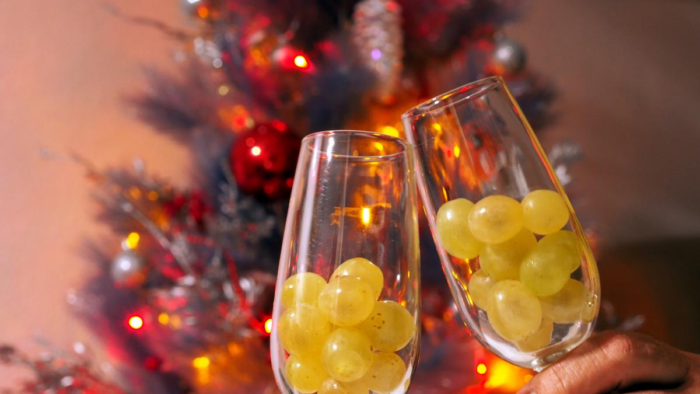
Twelve grapes (Spain)
Grapes are eaten during New Year’s Eve in Spain and some other areas of Latin America. These grapes are known as the uvas de la suerte, meaning grapes of luck, and the custom follows a few simple rules:
- One grape is eaten with every ring of the clock at midnight.
- Every grape represents one month of the year ahead.
- Finishing all 12 grapes before the ringing of the clock ends symbolizes good luck.
The origin of the custom is unclear. A popular legend credits Alicante grape growers in the early 1900s with using up a surplus harvest, but food writer Jeff Koehler traces it back to the 1880s.
Lentils with cotechino (Italy)
In Italy, lentils are eaten at the turn of the year because the small round seeds look like coins and are believed to bring money. They are often served with cotechino, a spiced pork sausage, or zampone, a stuffed pig’s trotter, which stand for abundance. Some sources trace the custom to ancient Rome, though this is a popular claim rather than a settled fact.
Vasilopita (Greece)
A vasilopita is a New Year’s cake with a coin baked inside, and whoever finds the coin is said to be lucky all year. It is named after St Basil, who, according to legend, hid gold coins in bread for his followers. The recipe differs from place to place:
- In the cities, a sweet brioche-style bread flavoured with mastic, mahlab, or orange.
- In many homes, a lighter cake is closer to a sponge or pound cake.
- In Thessaly and western Macedonia, a savoury version, sometimes a cheese pie.
Whatever the recipe, the coin stays at the heart of the tradition. The story of St Basil, however, remains a legend rather than recorded history.
Banitsa with fortunes (Bulgaria)
In Bulgaria, the New Year banitsa is a pastry of filo, eggs, and white cheese that is baked for the ritual meal on New Year’s Eve. Before baking, small twigs from a cornel tree are tucked inside, and each twig carries a written wish for health, luck, or success for a family member or friend.
The cornel tree is a symbol of health, strength, and youth, which explains why its twigs are used. Bulgarian National Radio notes that many people now buy ready-rolled pastry for it. The pastry is shared, so the wishes are spread around the table.
Toshikoshi soba (Japan)
Toshikoshi soba is all about moving into the new year. Many Japanese people enjoy buckwheat noodles on New Year’s Eve, including before their shrine visit soon after midnight. The noodles carry several meanings:
- Their length is said to represent longevity.
- The fact that they break easily is believed to cut away the misfortune of the old year.
- According to another theory, goldsmiths used soba flour to collect leftover gold dust, which linked soba with prosperity.
The tradition is usually believed to have been established during the mid-Edo period. There are many more theories about its origin, but none of them can be proved.
Nian gao and fish (China and Chinese communities)
At Lunar New Year, many Chinese families serve nian gao, a sticky rice cake, and a whole fish for their sound. In Mandarin, nian gao sounds like “year higher”, promising a better year, and the word for fish sounds like “surplus”. A Smithsonian magazine feature on Lunar New Year foods notes that the dishes vary by region and that long noodles are eaten whole for a long life.
Apples and honey (Jewish New Year)
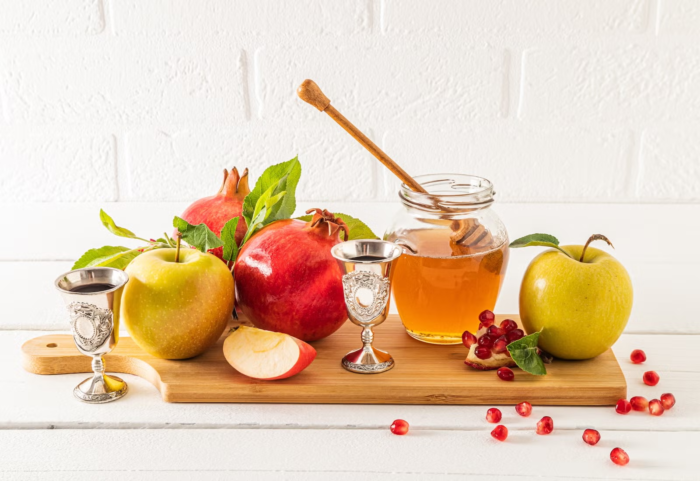
At Rosh Hashanah, the Jewish New Year in autumn, people eat apples dipped in honey for a sweet year and pomegranates, whose many seeds stand for many good deeds. These symbolic foods, called simanim (signs), come from a passage in the Talmud. Traditions vary, from fish to leek fritters, and for observant Jews they carry religious meaning.
Why Are These Food Traditions Still Popular?
Food is easy to share, and a tasty custom is easy to keep. A dish made every year becomes a family tradition that links people to relatives and home, and skipping it can feel like missing part of the celebration. Customs change too, and many of the foods in this list now exist in more than one version:
| Food | Original custom | How it has changed |
| Twelve grapes | Spain | Also eaten in Latin America |
| Vasilopita | A sweet yeasted bread, or a savoury pie in regions such as Thessaly | Many families now bake it as a quicker sponge-style cake |
| Banitsa | Homemade pastry sheets | Often made with ready-made filo today |
These are small adaptations, and they help keep the traditions alive. Very few people eat these foods with certainty about the outcome. Most do it because it is a chance to share their wishes with others.



Leave a Reply