
How Bike Rides Can Improve Your Mental Clarity and Reduce Stress

Alt Text: cyclists riding through a scenic flower-lined trail
Have you ever noticed how your mind feels more precise and sharper after a bike ride? Cycling is a powerful catalyst for mental clarity and emotional balance in our fast-paced world, offering a unique blend of physical activity and mindful escape.
Whether you’re pedaling through city streets or cruising along nature trails, each rotation of your wheels triggers a cascade of mood-enhancing compounds in your brain, transforming a simple ride into a powerful tool for mental well-being.
The beauty of cycling lies in its accessibility and adaptability – you don’t need hours of free time or special equipment to reap its mental health benefits, just the willingness to hop on your bike and let the natural rhythm of pedaling guide you toward greater mental clarity.
The Mental Health Benefits of Cycling
Physical activity is a proven way to enhance mental clarity, and cycling uniquely combines physical exertion with mental refreshment.
According to the Centers for Disease Control and Prevention (CDC), moderate to vigorous physical activity — such as cycling — significantly reduces the risks of anxiety, depression, and cognitive decline in adults.
As Jeff D. Williamson, Ph.D., professor of gerontology and geriatric medicine, explains:
“The brain is one of the most vascular organs in the body — it has an even longer highway of blood vessels than the heart. And so it makes perfect sense that part of brain health is vascular health.”
Physical activity also promotes better brain health by increasing blood flow and stimulating the release of mood-boosting neurotransmitters like endorphins, dopamine, and serotonin, which are critical for emotional regulation and focus.
Evidence-Based Insights from Health Research
A 2023 National Library of Medicine narrative review revealed consistent links between cycling and lower perceived stress, improved life satisfaction, and better general health.
To get the most from cycling as a wellness routine:
- Opt for gear that enhances both comfort and performance
- A custom-fit cycling jersey can inspire consistency and confidence
- Transform each ride into a grounding routine, not a daily chore
Consistency and enjoyment are crucial to making cycling part of a sustainable mental wellness plan. Here’s what research tells us about the mental health advantages of regular cycling:
- Bike commuters show lower stress levels during the first 45 minutes of their workday than those who drive.
- The psychological benefits extend beyond the immediate ride, with only 9% of cyclists requiring mental health prescriptions versus 14% of non-cyclists.
- Consistent cycling habits correlate with improved sleep patterns and reduced symptoms of anxiety.
- Regular riders report better concentration and increased productivity at work.
Additionally, bike commuters reported nearly one fewer day of sickness absence per year than those commuting by car or public transport. These findings underscore cycling’s dual role in enhancing mental clarity and overall quality of life.
Mindfulness on Two Wheels
Beyond physical benefits, cycling functions as a rhythmic and meditative practice. The repetitive motion of pedaling demands attention to breathing, road awareness, and body mechanics — drawing the mind into the present moment. This mental state steadily calms worry and overthinking.
Exposure to natural light and outdoor movement also contributes to mood regulation. Several studies emphasize the added mental boost of activities in green spaces, further validating cycling as a holistic mental health strategy.
Regular rides help reduce stress hormones, break up negative thought cycles, and improve cognitive function and emotional balance, supporting stronger resilience in daily life.
| Cross-train for balance: On non-cycling days, cross-train with light strength or yoga exercises to support muscle balance and improve overall mental resilience. |
Making Time for Two-Wheel Escapes
Getting on your bike doesn’t mean blocking out hours from your packed schedule. Quick 20-minute rides can spark significant improvements in your mental state and productivity.
Bike commuters experience notably lower stress levels within their first 45 minutes at work versus those who drive. The key is to find ways to incorporate cycling into your existing routine. Whether you rock during a lunch break spin or cruise through neighborhood streets after work, each pedal stroke counts.
Practical ways to make cycling a consistent part of your daily life:
- Replace short car trips with bike rides for errands
- Schedule “micro-adventures” – 30-minute rides before breakfast
- Join local cycling groups for weekend social rides
- Turn your commute into a workout by biking to work
- Use lunch breaks for quick neighborhood loops
Remember that consistency matters more than duration. Small, regular rides can build impressive mental resilience over time, making every pedal stroke an investment in your wellbeing.
Tips for a Mindful Ride
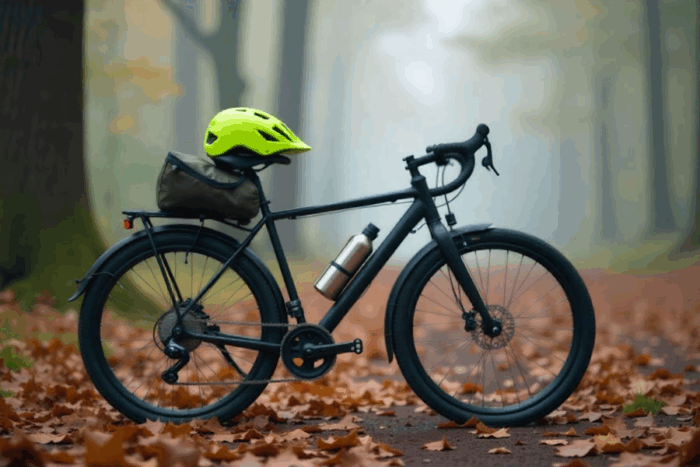
Alt Text: autumn cycling bike path with helmet
Cycling offers more than physical exercise—it’s a powerful path to mental clarity and emotional balance. Simple pedaling creates a natural rhythm that can sync with your breath, making each ride an opportunity for moving meditation.
Choosing comfortable gear that matches your style will make you feel more confident and focused during your rides. Essential gears needed during bicycling include the following key components and accessories:
- Helmet: Helmets protect your head and reduce the risk of serious injury.
- Water and Hydration: Use a water bottle in a cage or a hydration pack.
- Reflective Gear and Lights: This is for visibility during low-light or night riding.
- Bike Repair Kit: This kit includes tire levers, patch kits, spare tubes, a pump or CO2 inflator, and a multi-tool to handle flats or minor mechanical issues.
- Protective Eyewear: Sunglasses or clear lenses protect the eyes.
- Appropriate Clothing: Breathable, moisture-wicking cycling jerseys and padded shorts or tights improve comfort.
- Gloves: Protect hands from vibrations and injuries in case of falls.
- Identification and Emergency Info: Carry ID, medical information, and emergency contact details.
- Phone and Money: For navigation, emergencies, and any incidental expenses.
- Bike Lock: To secure your bike when stopping.
- Bell or Horn: To alert pedestrians and other cyclists.
- Safety Checks Before Riding: Check tire pressure, brakes, wheel security, and handlebar tightness.
These components and accessories provide a safe, efficient, enjoyable cycling experience. The right gear depends on the rider’s needs, terrain, and cycling style.
Your bicycle can become a tool for stress relief, especially when you embrace mindful riding techniques. Regular cyclists experience 15% less anxiety than non-cyclists, showing how this activity can transform your mental state.
Combining physical movement and outdoor exposure creates an ideal environment for clearing your mind.
Key strategies to make your rides more mindful
- Focus on your breathing pattern, matching it to your pedaling rhythm
- Notice the sensations in your body – the wind on your skin, the sun on your face
- Pay attention to the sounds around you – birds chirping, leaves rustling
- Count your pedal strokes as a form of moving meditation
- Practice gratitude for the strength in your body as you ride
Transform your daily rides into opportunities for mental reset by staying present and engaged with your surroundings.
Set an intention before each ride, whether to release stress, boost energy, or enjoy the journey. This mindful approach will help you maximize both the physical and psychological benefits of cycling.
| Stretch, ride, and recover: Incorporate short bouts of stretching before and after cycling to release muscle tension and improve blood flow to the brain. |
Ride to Renew
The transformative power of cycling extends far beyond physical fitness. It is vital for mental clarity and emotional balance in our increasingly hectic world.
Through consistent cycling practice, individuals can tap into a natural source of stress relief, mood enhancement, and cognitive improvement that carries benefits beyond the saddle.
The fusion of mindful movement, outdoor exposure, and neurochemical benefits makes cycling an unmatched form of self-care accessible and sustainable for long-term mental wellness.










Leave a Reply