
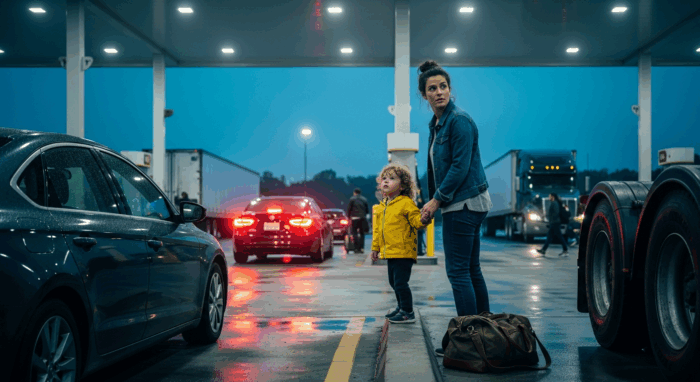
Image generated by Gemini
The recent harrowing report from Winter Haven, Florida—where a toddler was momentarily left in a departing rideshare vehicle—serves as a stark reminder of the complexities of family travel. While the child recovered safely, the incident highlights the intersection of situational awareness and the physical safety of commercial premises.
When traveling with children, the “pit stop” is often viewed as a logistical necessity. However, from a risk management perspective, these locations are high-velocity environments where human error and environmental hazards converge. One of the most common yet overlooked risks during these transitions is a slip and fall at a gas station, which can turn a routine break into a medical emergency.
The Anatomy of a High-Risk Transition
A “rideshare mix-up” or family vehicle mishap rarely results from pure negligence. Often, it is due to cognitive tunneling. When traveling, stress may cause a parent to focus only on one task (such as grabbing a diaper bag), creating a brief lapse in the “visual chain of custody” of a child.
To counteract this, families should adopt a Standard Operating Procedure (SOP) similar to those used in high-stakes industries:
- The Positive Hand-Off: Never assume a driver knows you are still unloading. Maintain physical contact with the car door until all occupants are accounted for.
- Verbal Confirmation: Use clear, loud communication. “I am clear of the vehicle” should be the trigger for a driver to put the car in gear.
- The Safety Anchor: Assign younger children a “spot” on the vehicle’s body to touch while waiting for adults, keeping them out of traffic.
Spotting Workplace Harassment and Environmental Negligence
Safety is not just a parent’s job. Property owners also have a legal duty. Business leaders must watch for workplace harassment to keep staff safe. In the same way, gas station and rest stop owners need to identify and fix hazards that could hurt people.
The Science of Premises Liability
Under the principle of duty of care, individuals who own or manage property are legally required to act promptly to eliminate safety risks to visitors. On road trips, threats may be hard to see until an accident happens. For example, you can slip at a gas station due to several overlooked problems.
| Risk Zone | Potential Hazard | Preventive Expectation |
| The Pump Island | Fuel overflows or oil leaks | Use of absorbent materials and regular inspections. |
| Entrance Ways | Improperly secured floor mats | Mats should be heavy-duty and flush with the floor to prevent trips. |
| The “Cold Zone” | Condensation from walk-in coolers | “Wet Floor” signage must be prominently displayed. |
Legal Protections for Families
If your family member is hurt because of a hazard—like slipping on soap in a restroom or tripping on cracked pavement—the costs can be very high.
In these cases, a personal injury attorney with premises liability experience is important. They help show the property owner knew about the danger but failed to make their place safe for your family.
Final Thoughts
Knowledge is your strongest defense. By implementing strict transition protocols and staying alert to environmental hazards, you can protect your family from both the “heart-stopping” headlines and the hidden dangers of the road. Take the next step to safeguard your loved ones: join our professional community on Facebook for expert insights or check out our Family Road Trip Checklist today. Start your journey prepared and turn every road trip into a safe, memorable adventure—act now to prioritize your family’s well-being.










Leave a Reply